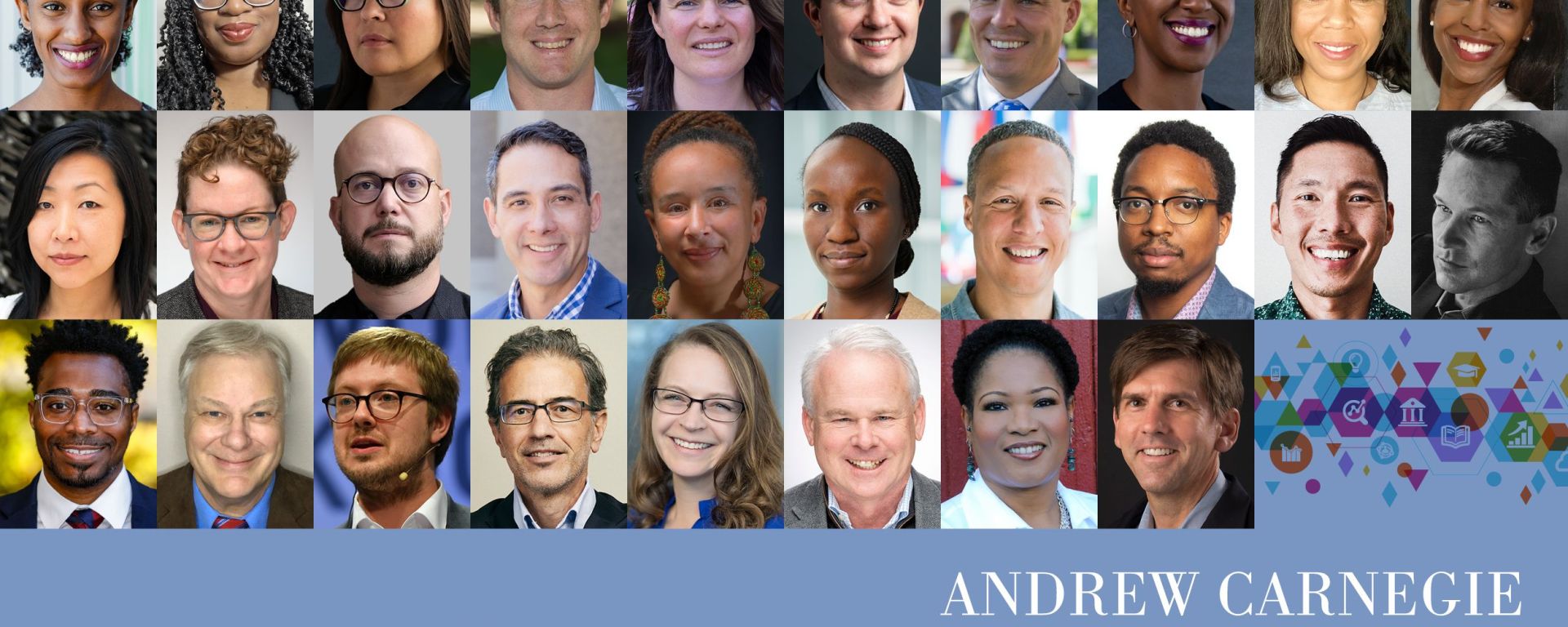
Over the past four years, I have led strategic communications around our foundation’s Andrew Carnegie Fellowship program, with the goal of bolstering the brand and elevating Fellows’ scholarship. Beginning in 2019, we introduced a key message regarding the vital role of the humanities and social sciences in addressing enduring challenges and pressing problems of our day. In a STEM-obsessed world, our aim was to highlight the relevance of the humanities and social sciences to understanding our world and ourselves. Over multiple years, we have built significant brand equity and cultivated strong relationships with our Fellows and an audience interested in this scholarship, leading to steady growth in engagement over time and an unprecedented spike in community response in 2022.
A key component of this effort was expanding content focused on Fellows’ scholarship on our website and launching a successful new webinar series with forums on topical issues like racial justice, rights, and climate change. This allowed us to focus promotion to people interested in those issues, both through social targeting and by partnering with other organizations that already had an audience invested in those topics. Each webinar also enabled us to capture registrants’ contact details so we could stay in touch and retarget them with news about the program, including our annual announcement of Fellowship winners. We also introduced fresh and more colorful campaign graphics, and simplified our social media toolkit — both of which contributed to dramatically increased engagement and interest from our Fellows, their institutions, and the general public.

Through these combined efforts, we saw steady gains in social engagement and web traffic around the annual Fellows announcement. In 2022, the announcement achieved nearly 212,000 unique page views, representing an 890 percent increase over four years and a stunning 203 percent increase over 2021. We also saw unsolicited social sharing from prominent journalists and scholars like Brent Staples and Annette Gordon-Reed, further evidence that the program’s visibility and value was achieving substantially wider recognition than had historically been the case.
 DEBRA WEXLER